
Simulation tools, numerical methods, reproducible workflows.

Chaste: Cancer, Heart and Soft Tissue Environment
Collaborators: Universities of Sheffield and Nottingham
Funder: BBSRC
A C++ simulation package with Python bindings, designed for computationally intensive problems in biology and physiology. It supports tissue- and cell-level electrophysiology, discrete and agent-based tissue modelling, and soft tissue modelling.
Full project page here.

POSEIDON: A model of fish, fishers, and fisheries.
Collaborators: Prof. Richard Bailey, School of Geography and the Environment
Funder: UK Research and Innovation (UKRI)
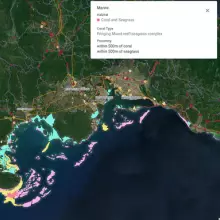
POSEIDON is an advanced simulation tool designed to help manage fisheries by modelling the behaviour of fishing fleets and their interactions with the environment.
Full project page here.
Local2Global: Infer global embeddings from local graph embeddings
Collaborators: Mathematics Institute, University of Warwick
Funder: Turing Institute
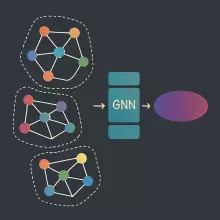
A Python library for building patch-based graph structures, including temporal graphs, using Graph Neural Networks. It infers global embeddings from local patches for tasks like anomaly detection, event prediction, and graph-level classification.

PyBaMM: An open-source battery simulation package written in Python.
Collaborators: Mathematical Institute - Prof Jon Chapman and Prof Colin Please
Funder: The Faraday Institution
PyBaMM consists of (i) a framework for writing and solving systems of differential equations, (ii) a library of battery models and parameters, and (iii) specialized tools for simulating battery-specific experiments and visualizing the results.
Full project page here.
RoughPy: Streaming data as rough paths Python toolbox
Collaborators: DataSig, Mathematical Institute - Prof. Terry Lyons and Dr. Sam Morley
Funder: EPSRC, Alan Turing Institute, The Data Centric Engineering Programme
RoughPy is a package for working with streaming data as rough paths, and working with algebraic objects such as free tensors, shuffle tensors, and elements of the free Lie algebra.
diffsol: High-performance ODE & DAE solvers in Rust & Python
diffsol is a Rust crate for solving ODEs and semi-explicit DAEs with adaptive, stiff and non-stiff solvers, sensitivity analysis, and event handling. With the DiffSL DSL and pydiffsol bindings, it delivers Rust-level performance to Python users

RELION: REgularised LIkelihood OptimisatioN
Collaborators: Scientific Computing, Science and Technology Facilities, Harwell Science & Innovation Campus
Structural Biology Laboratory, Oxford University
MRC Laboratory of Molecular Biology, Cambridge University
Funder: Scientific Computing, Science and Technology Facilities
RELION employs empirical Bayes for electron cryo-microscopy structure determination. OxRSE have assisted with code optimisation and GPU use, leading to improved computational efficiency.
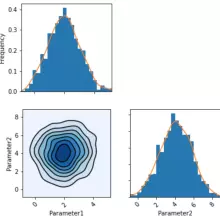
PINTS: Bayesian inference and optimisation for noisy time-series
Collaborators: Department of Computer Science, University of Oxford - Michael Clerx, Martin Robinson, Ben Lambert, Chon Lok Lei, Sanmitra Ghosh, Gary Mirams, and David Gavaghan
University of Nottingham, University of Macau
Funder: EPSRC
Open-source Python software for parameter inference, optimisation, and uncertainty quantification in noisy time-series models. Widely used in computational biology, electrochemistry, and other scientific domains.